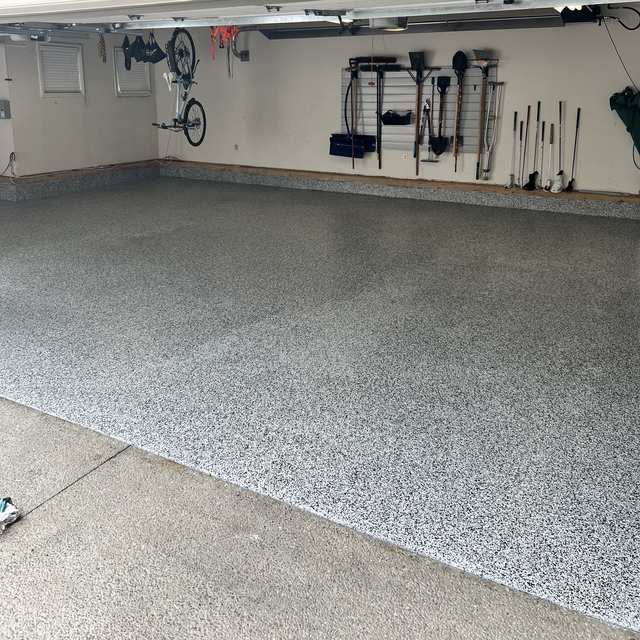
Garage floor coating in Calgary
A garage floor that lasts, explained.
This page explains how a garage floor coating is built, why most of them fail, and what to ask any installer before you hire one. If you would rather talk it through in person, book a design visit and we will come to your garage.
The visit is free. One quote follows by email.
The basics
What a garage floor coating is.
A garage floor coating is a system of resin layers bonded to the concrete. Once it has cured, the slab no longer sheds dust, no longer absorbs salt and oil, and can be cleaned with a mop. When the work is done properly, the coating fills the open pores of the ground concrete and cures into a hard, continuous surface that is part of the slab. When the work is done badly, the coating sits on the surface of the concrete without a proper bond, and it eventually peels.
The difference between the two is not visible in the colour or the gloss. It is decided by what was done to the concrete before the first coat, by what that first coat was, and by how much material was built on top of it. The sections below explain each of those so that you can judge any floor, including ours.
A common question
Is this an epoxy floor?
In part. Epoxy is the right material for the layers that bond to the concrete and provide the thickness of the floor. It is the wrong material for the surface you walk and park on, because epoxy yellows in sunlight and dulls with wear. The wear layer on our floors is polyaspartic, a different resin that is UV stable, does not yellow, and cures quickly to a hard finish. The result is an epoxy floor underneath and a polyaspartic floor on top.
When a contractor says "epoxy floor", they usually mean a layered system of this kind. When a hardware store sells an "epoxy kit", it means a single thin coat of a water-based product applied to concrete that has not been ground. The two are not the same product, and the second one is the reason the word has a poor reputation.
Why floors fail
Why garage floors fail.
Most floor coatings that fail do so for one of four reasons. All four are decided before the colour goes on.
Reason 01
The concrete was not prepared.
Concrete cures with a weak, dusty surface layer called laitance, and most garage slabs also carry a sealer, old paint, oil and tire residue. A coating applied over that material bonds to the residue rather than to the slab. Acid etching, the method used by most kits and by many installers who finish in one day, roughens the surface slightly and leaves most of that layer in place. Diamond grinding removes it and leaves a clean, open surface that the resin can bond to.
Reason 02
Moisture came up from below.
A garage slab sits on the ground, and water vapour moves up through concrete. In Calgary, the freeze-thaw cycle and the spring melt increase that movement. When vapour reaches a coating that was not designed for it, it pushes the coating away from the slab. The result is a blister, or an area near the door that lifts a year or two after the install. The correct response is a primer made for damp concrete, applied as the first layer on every floor.
Reason 03
Too little material was applied.
A floor installed in one day is usually one coat, or two thin ones. Thin coats wear through where the tires sit and chip at the edges. A floor built to last has a primer, a thick base coat with the flake set into it, and a clear topcoat applied heavily enough to cover the flake completely.
Reason 04
The wrong wear layer was used, or the right one was applied late.
Epoxy on the surface yellows. Polyaspartic holds up, but it must be applied while the base coat will still accept it, and it must be worked within its own working time or it leaves ridges and lap lines. The timing between coats requires experience, which is why the schedule matters as much as the products.
The system
The four layers, and what each one does.
- 04 Polyaspartic clear topcoatThe wear surface. UV stable, applied heavily enough to bury the flake. 10 to 12 mil.
- 03 Tinted base coat with flakeHigh-build epoxy, pigmented to the blend, flake broadcast to full coverage. 15 to 20 mil.
- 02 Moisture barrier primerPenetrates the ground slab and blocks vapour from below. 8 to 12 mil.
- 01 Concrete, diamond groundLaitance, sealer and contamination removed; cracks routed and filled; vacuumed.
-
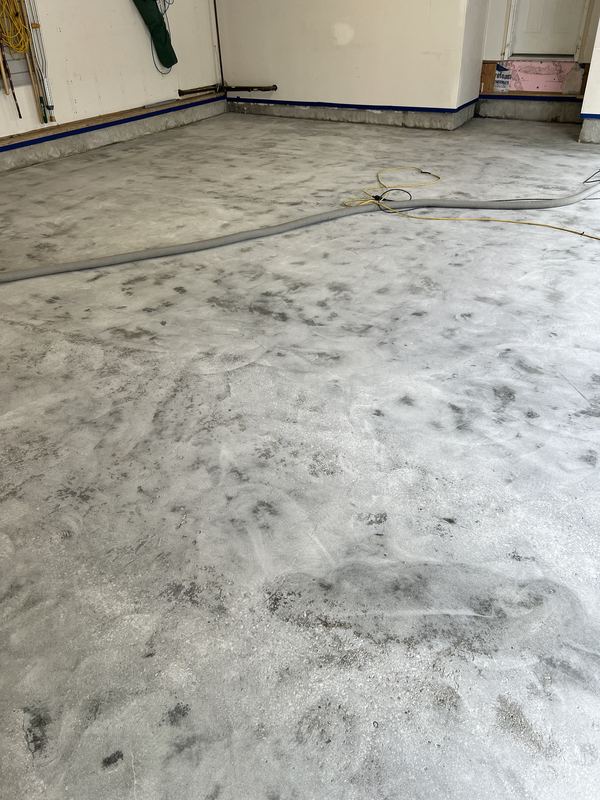
Layer 01
Surface preparation
The entire slab, including the stem walls where the floor meets the wall, is diamond ground to a uniform profile. Grinding removes laitance, sealers and contaminants and opens the surface of the concrete. Cracks are routed and filled, pits and spalls are patched, and the repairs are ground flush with the slab. The floor is vacuumed rather than swept so that no dust remains between the concrete and the primer, and the adjacent surfaces are masked. This stage determines whether the floor lasts, and it is the stage that is most often shortened.
-
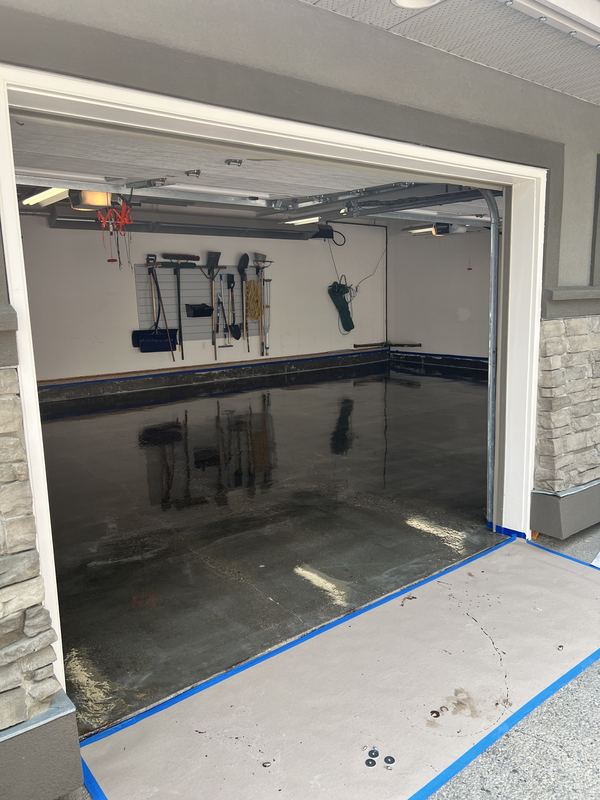
Layer 02
Moisture barrier primer
The primer is a two-component, 100 percent solids epoxy formulated for damp and newly placed concrete. It penetrates the ground surface, seals the slab, and forms a barrier against the vapour that causes blistering and delamination. In testing it bonds to damp concrete at 350 psi and to dry concrete at 800 psi. It is applied to every floor.
-
Layer 03
Tinted epoxy base coat with full flake broadcast
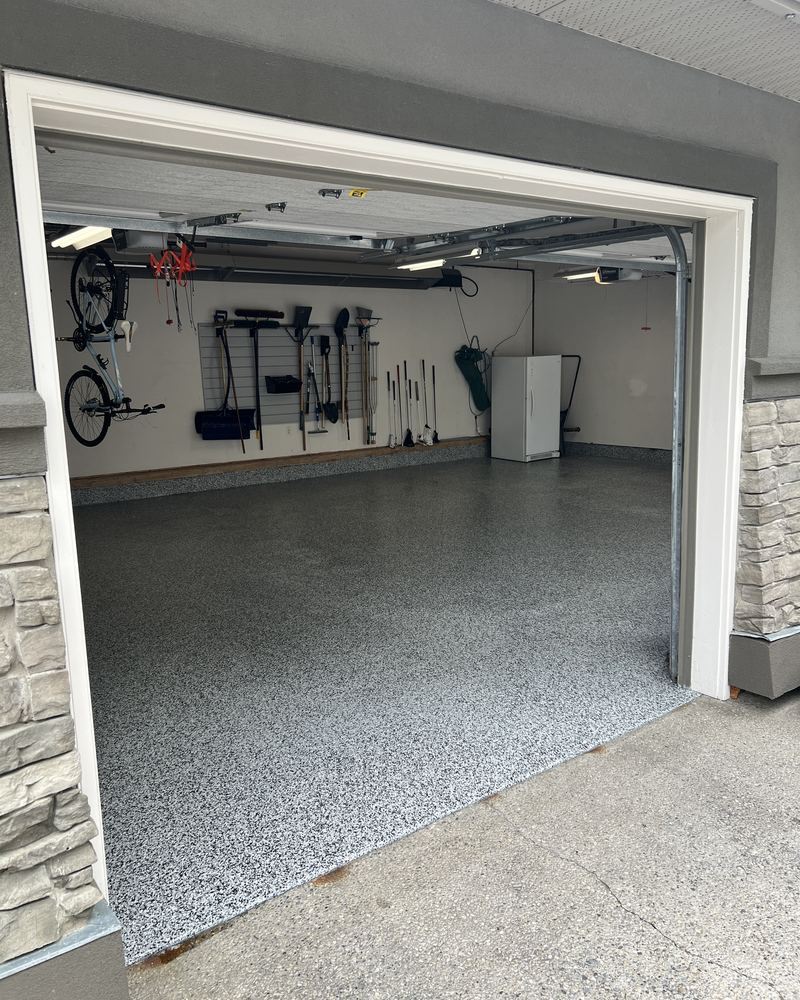
The base coat is a high-build epoxy, pigmented to match the base colour of the chosen flake blend, applied at about 15 mils. While it is wet, vinyl flake is broadcast until the epoxy is completely covered. After the base coat cures, the loose flake is scraped and vacuumed off, leaving a level surface. This layer provides the colour, the texture and most of the thickness of the floor. The cured epoxy tests at 13,100 psi in compression, which is well above the strength of the concrete beneath it.
-
Layer 04
Polyaspartic clear topcoat
The topcoat is a two-component polyaspartic applied over the flake as the wear surface. It is applied more heavily than a plain floor would require so that the flake is fully encapsulated and the finish is smooth and easy to clean. It is UV stable and non-yellowing, with high abrasion resistance and resistance to hot tire pickup. Gasoline, antifreeze and motor oil left on the surface for twelve hours have no effect on it, and neither do household cleaners that contain alcohol or ammonia. In testing it bonds to concrete at 380 psi and withstands 150 inch-pounds of direct and reverse impact.


All three coatings are 100 percent solids with zero VOC. There is no solvent odour during the install and nothing evaporates from the floor afterward. The coatings are formulated and manufactured in Calgary.
Moisture
Why we use a moisture barrier rather than a moisture test.
Some installers test the slab for moisture and charge more when the reading is high. Others do not test at all. We do neither. The moisture barrier primer is the first layer on every floor we install, so the system is built for a damp slab from the start rather than measured once on the day of the install. A garage slab in Calgary will be damp at some point during the life of the floor, usually during the spring melt, and the floor has to be built for that condition.
Climate
Built for a Calgary garage.
A Calgary garage is exposed to road salt and brine carried in on the tires, to melt water that sits on the slab for weeks, to slab temperatures that change sharply between seasons, and to the freeze-thaw cycle that widens every crack. The system described above is chosen for those conditions. The primer handles the moisture that freeze-thaw drives through the slab. The base coat is thick enough that salt and grit wear on resin rather than on concrete. The polyaspartic topcoat does not yellow in summer sunlight through an open door, and winter slush and grime wipe off it.
The climate also sets the install season. The coatings need the slab at 15 C or warmer while they cure and the humidity below 85 percent. Most garages cannot hold those conditions reliably between November and April, so installs are closed for the winter and spring dates are booked during the cold months. Design visits and quotes continue all year.
The job
What the job looks like, day by day.
- 01
Grind, repair, prime
On the first day the slab is ground, repaired, vacuumed and primed.
- 02
Base coat and flake
On the second day the base coat is applied and the flake is broadcast.
- 03
Scrape and topcoat
On the third day the loose flake is scraped off, the floor is vacuumed and the topcoat is applied.
An average two or three car garage takes three days or less on site. Heavy repair work or a cold garage can add a day. You can walk on the floor the day after the topcoat is applied, and you can park on it after a week. Between coats the garage stays closed and at temperature, and each coat is applied within the recoat window of the coat below it. That is what bonds the four layers into a single floor.
Your part
What you do before and during the install.
Before the start date, the garage needs to be cleared of vehicles, shelving, freezers and everything else on the floor. We do not move belongings. If you need extra space for the duration of the job, a storage container can be placed in the driveway, arranged on request and billed at cost.
During the install the garage needs power and water, a temperature of 15 C or warmer through the cure, and pets kept out of the space. An adult should be reachable by phone. The flake colour is confirmed at booking so that the materials are on site on the first day.
Warranty
The warranty.
Every floor comes with a fifteen-year warranty in writing. If the floor peels, lifts, or comes up under hot tires because of how it was installed, we return and repair it. The warranty transfers once to the next owner if the house is sold. It does not cover wear and scratches from use, cracks or movement in the slab itself, impact damage, or chemical damage. The full terms are written into the agreement you sign before any payment is made.
A warranty is only as reliable as the process behind it. The grinding, the primer and the thickness of the coats are what make fifteen years a reasonable commitment. Ask any installer who offers a long warranty to explain those three things.
Care
Looking after the floor.
Sweep or dust mop the floor as needed and wash it with water and an ordinary household floor cleaner. No special product is required. Wipe up spills when you see them; fuel, oil and antifreeze will not mark the floor if a spill is missed for a few hours. Hot tires do not affect it. Dragging sharp metal across the surface will scratch it, as it would any floor. There is no re-sealing schedule, because the topcoat is the wear layer and it is built to last the warranty period.
Comparing quotes
How to compare quotes.
Quotes for the same garage can differ by thousands of dollars, and the price alone does not explain why. Ask each installer the same questions and record the answers.
- How is the concrete prepared: by grinding or by acid etching? Are the stem walls included?
- Is a primer used, and what is its purpose? If moisture is not mentioned, ask what happens when the slab is damp.
- How many layers are applied, and approximately how thick is each one?
- What is the topcoat made of? Epoxy, polyurethane and polyaspartic are different materials with different service lives.
- How many days will the crew be on site, and why? A one-day install means one or two thin coats.
- Who will do the work: the person providing the quote, or a crew you have not met?
- What does the written warranty cover, what does it exclude, and does it transfer to a new owner?
A quote that answers all seven questions clearly is worth more than a lower quote that does not.
Colours
Colours.
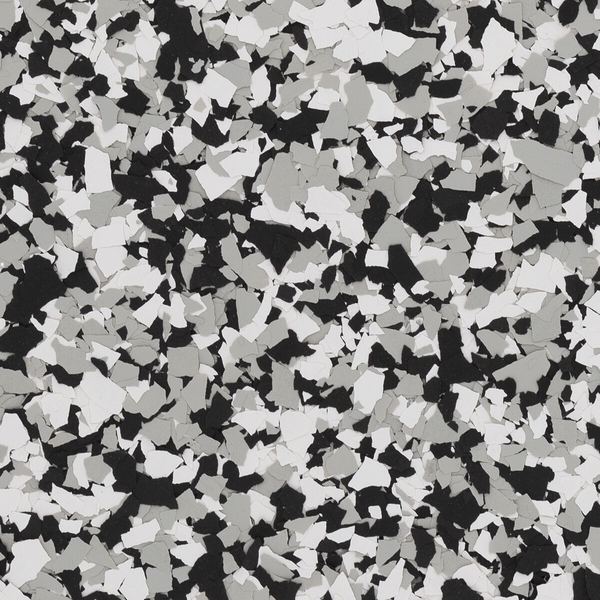
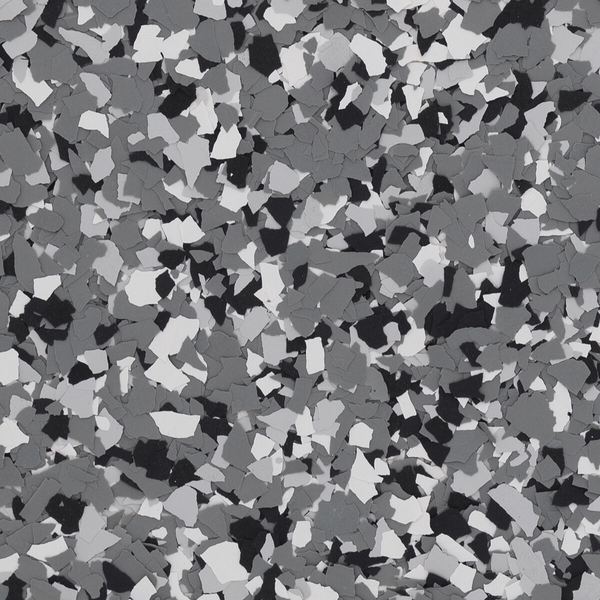
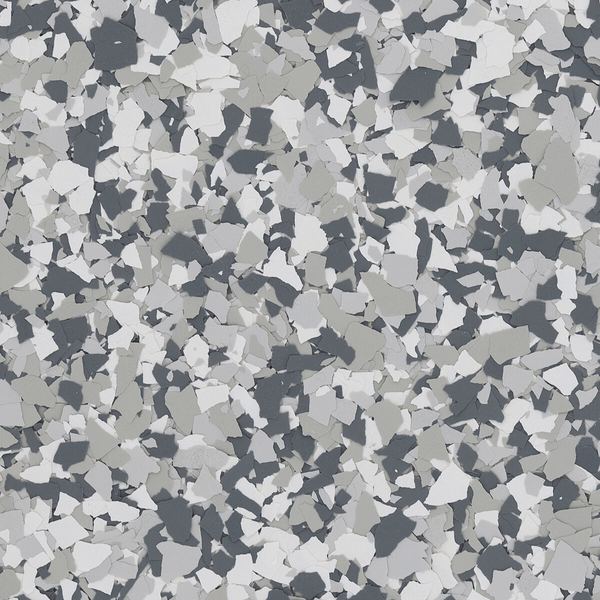
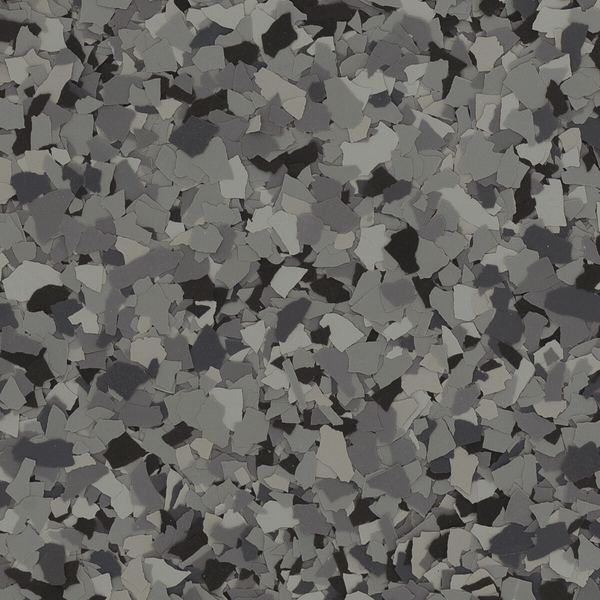
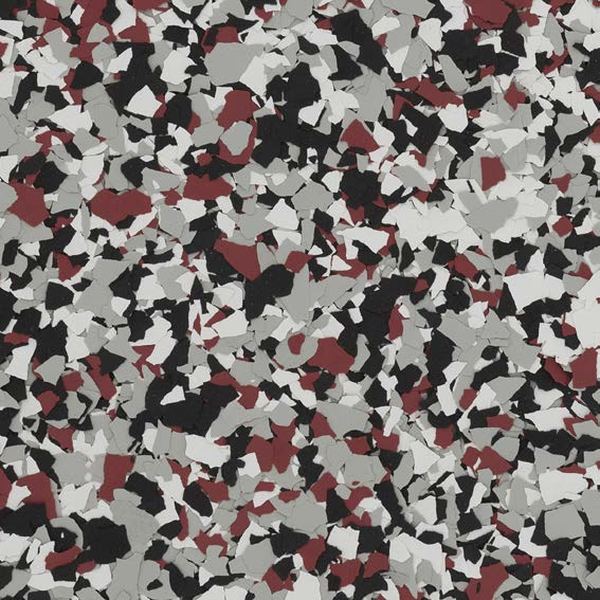
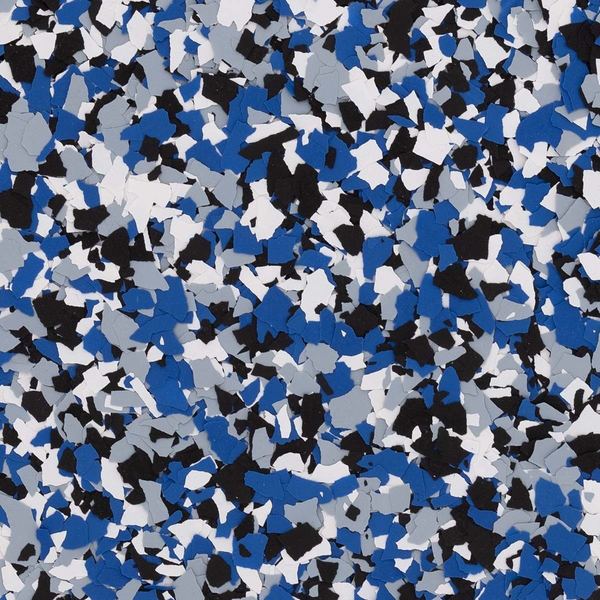
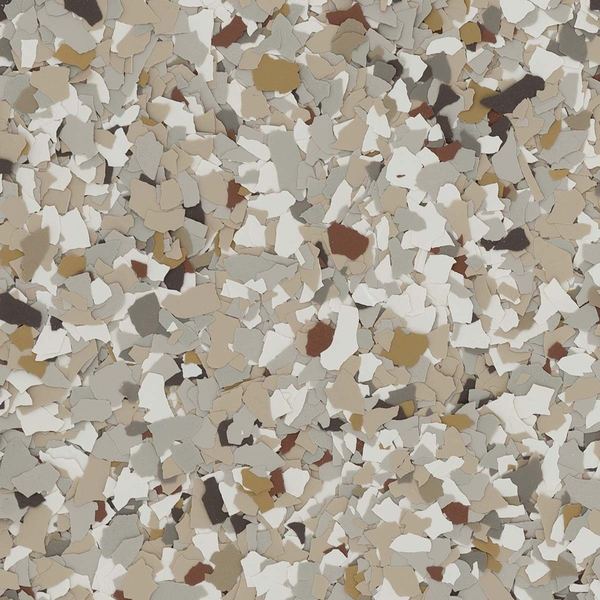
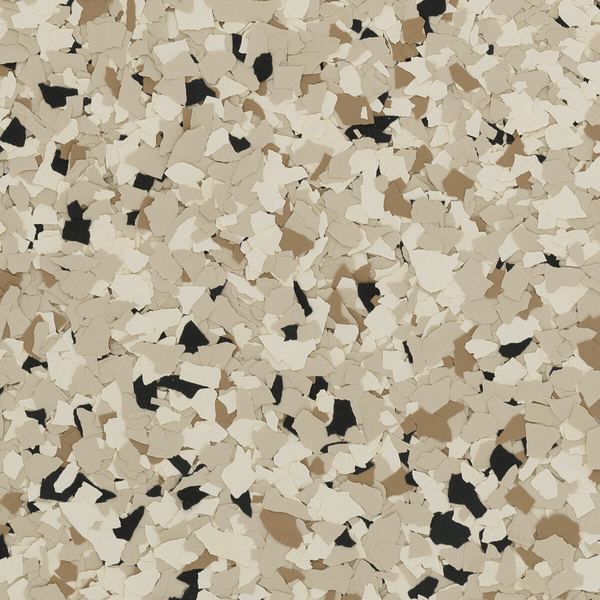
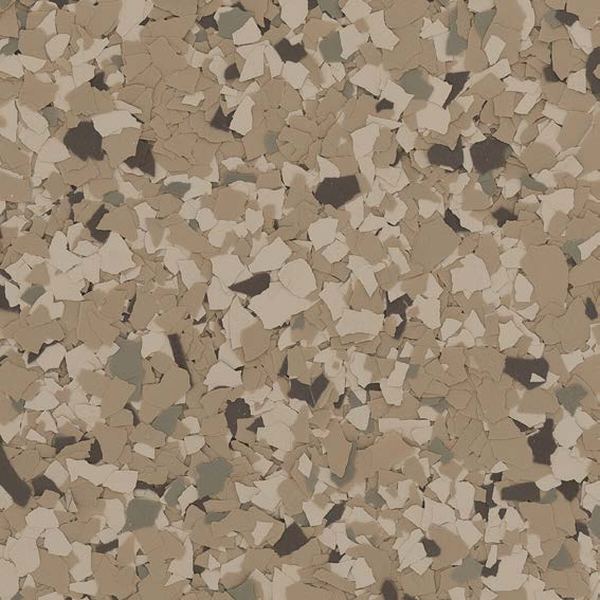
Nine flake blends make up the standard range. They were chosen because they suit a garage and conceal dust, salt and tire marks between cleanings. Other blends can be ordered, and a solid colour floor is available instead of flake. Both are priced at the design visit.


Our work
Our work.
Real jobs, before and after. More are added as jobs are completed.


Triple garage, Calgary. Domino blend. Photographed from the same position before and after.


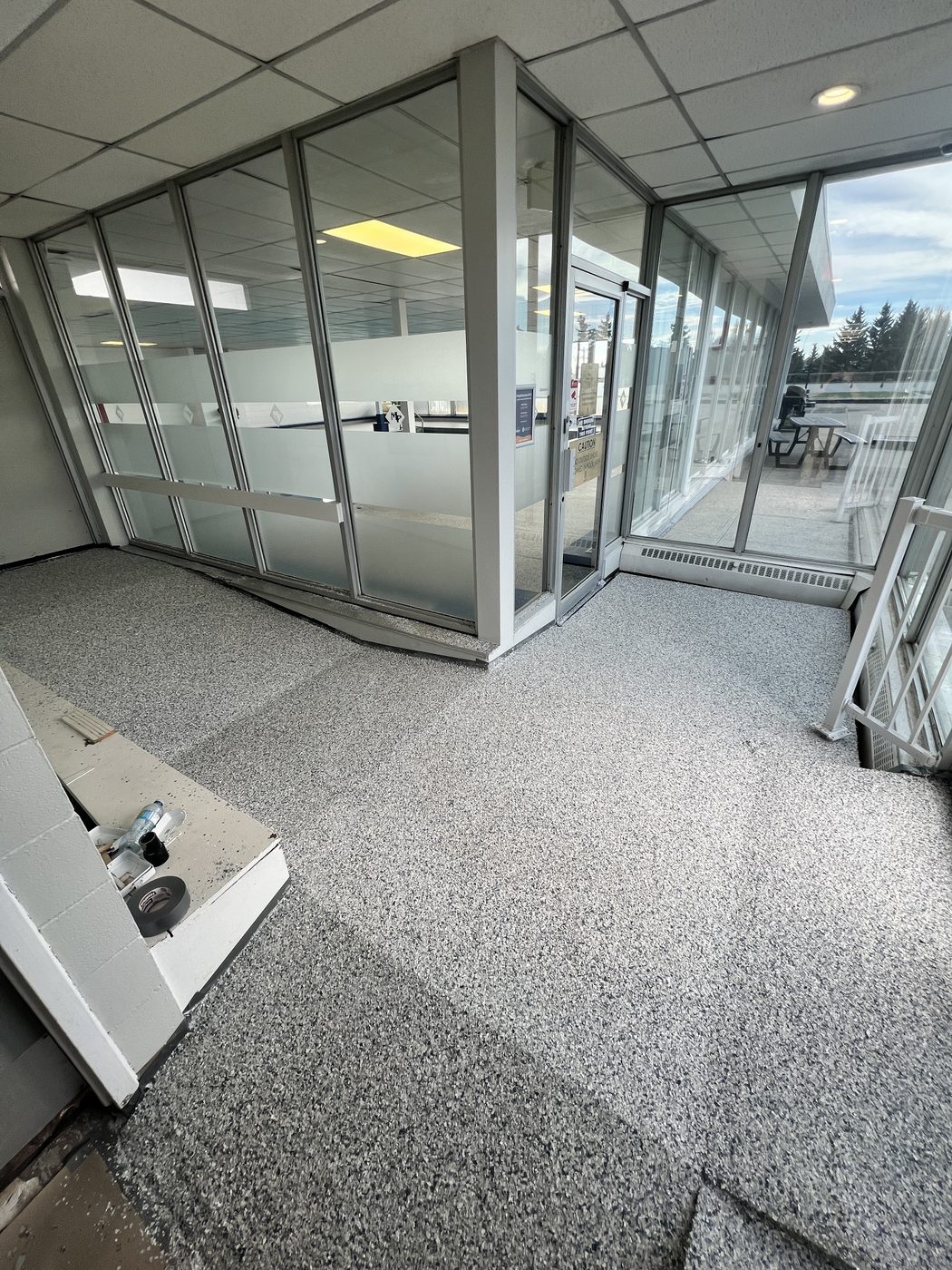
Change rooms and the hallway to a pool, SW Calgary. Tidal Wave blend with an anti-slip topcoat.
The owner
Who is behind it.

I am Alex Hendrie. I grew up in my family's concrete business, then spent seven years in project and maintenance work in the oil sands and a couple of years in marketing. I started Vanta because I knew the trade and I knew what people want from a garage: a finished room, not only a coated floor. I install every floor myself. If it has my name on it, it gets done properly.
Questions
Questions people ask.
How long until I can use the garage?
You can walk on the floor the day after the topcoat is applied and park on it after a week.
Does it work on old, cracked concrete?
Yes, and most Calgary garages are in that condition. Cracks are routed and filled, pits are patched, and the whole slab is ground flat before the primer is applied. Movement in the slab after the install is not covered by the warranty, and we will tell you at the visit if your slab shows signs of it.
Do you install in winter?
No. The coatings need the slab at 15 C or warmer while they cure, and a Calgary garage cannot hold that temperature reliably once the cold sets in. Installs are closed until April 15, 2027. Design visits and quotes continue through the winter.
Do I have to empty the garage?
Yes. We do not move belongings. If you need extra space for the duration of the job, a storage container can be placed in the driveway, arranged on request and billed at cost.
Will it be slippery?
A full flake floor has a light texture. Where a floor is regularly wet, an anti-slip aggregate can be added to the topcoat. That is how we build floors such as commercial change rooms, and it is available on a garage on request.
How is this different from a paint kit?
A kit is one thin coat rolled onto concrete that has not been ground, and it peels the first time a hot tire sits on it. Our floor is four layers on a diamond-ground, repaired slab: a moisture barrier primer, a thick tinted base coat with full flake, and a clear polyaspartic topcoat, with a fifteen-year warranty in writing.
Book
Book a design visit.
We come to your garage, measure the floor, look at its condition and go through the colour options with you. The visit is free, and one quote follows by email. We call within one business day to set the time.